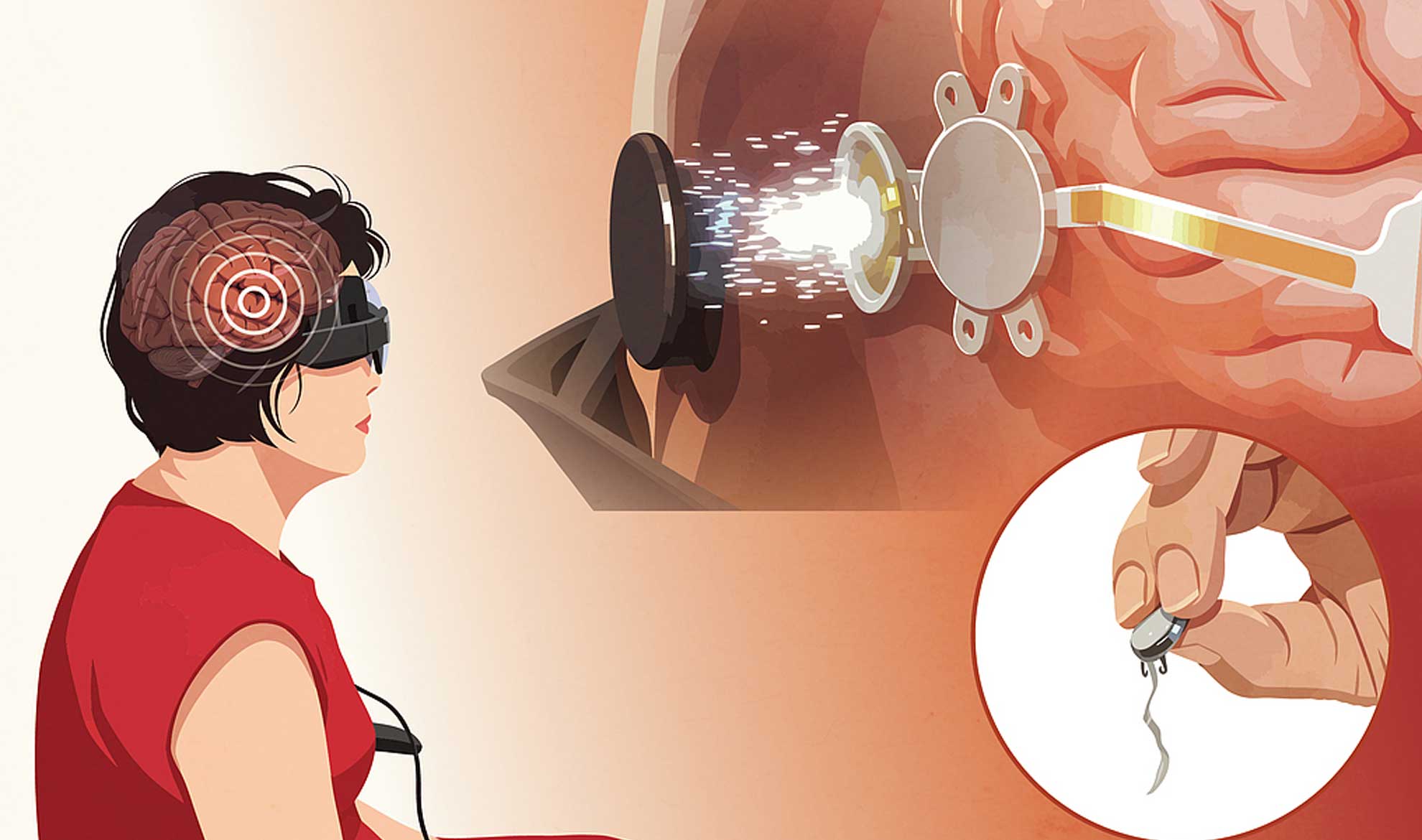
China’s domestically developed Intelligent Micro Implant Eye (IMIE) epiretinal prosthesis system has achieved a clinical milestone by enabling the country’s first completely blind patient to recognize basic Chinese characters and navigate indoors. Developed by Professor Xu Huizhuo’s team at Xiangya Hospital, the system uses high-definition camera glasses to capture visual data, which is wirelessly transmitted to an intraocular implant. A 256-channel electrode array then stimulates the macular region to generate artificial vision. While artificial vision requires extensive brain training, the patient has already shown significant improvement since her April surgery, offering new hope for millions with degenerative retinal diseases.
More broadly, brain-computer interfaces (BCIs) bypass damaged biological interfaces to establish direct communication between the brain and external devices. The technology can decode movement intentions for patients with stroke, spinal cord injuries, or ALS, and restore sensory functions. BCIs are categorized into safe but lower-resolution non-invasive scalp sensors, high-resolution but surgically risky invasive cortical implants, and intermediary semi-invasive skull implants. These three approaches are expected to coexist to meet varying medical needs. Recognized as a strategic future industry, BCI technology is now featured in China’s government work report, with institutions nationwide actively deploying products for neurological rehabilitation and disease treatment.
Credit – CGTN
You can listen to the programs organized by MI Radio on Google Podcast, Apple Podcast and Spotify.




You can download MI Radio application on Google Play Store and Apple App Store.


