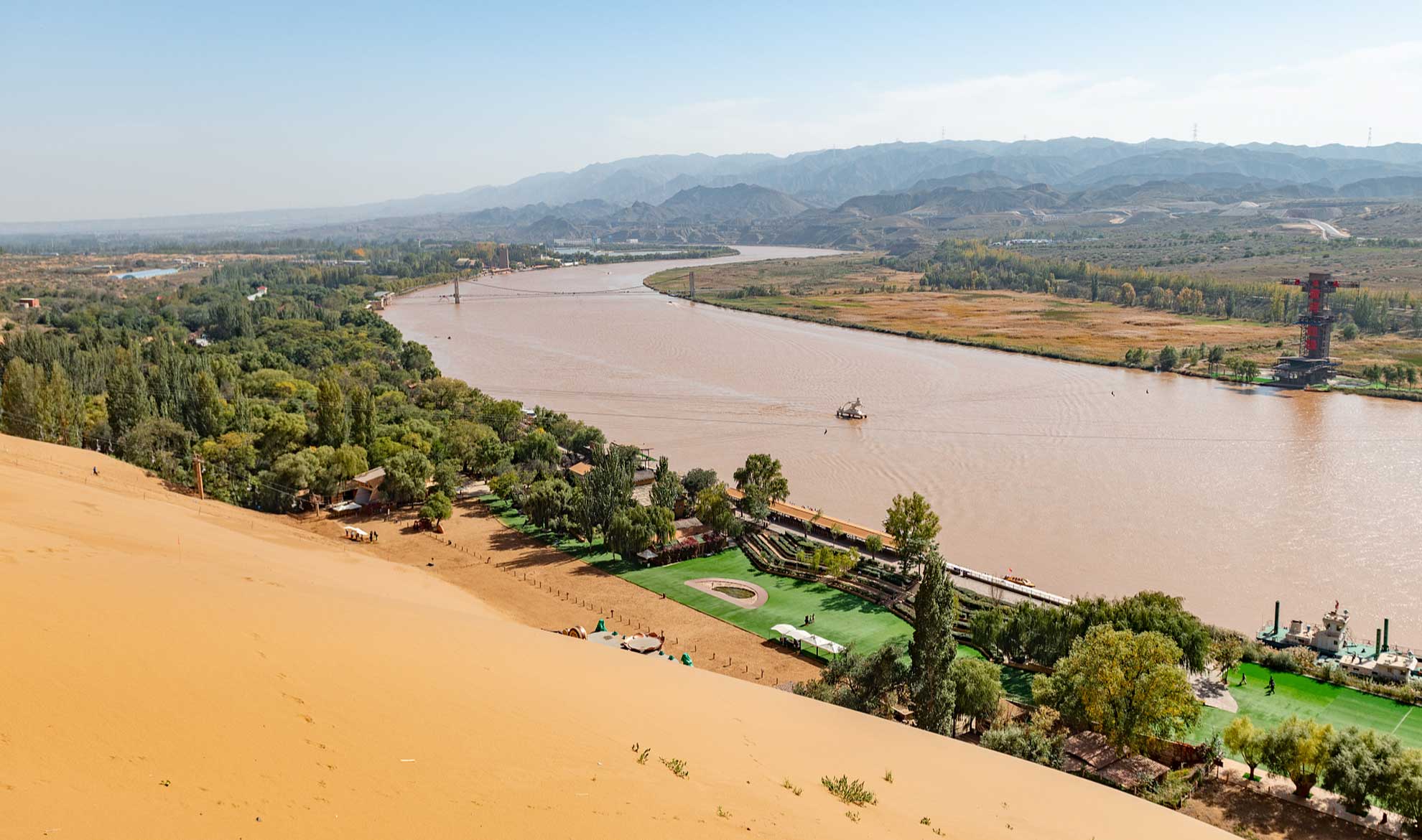
Scientists in northwestern China are using solid cyanobacteria “seeds” to form artificial biological soil crusts in arid desert areas, aiming to stabilize sand dunes and prepare the ground for future vegetation. Developed by the Shapotou Desert Research and Experiment Station under the Chinese Academy of Sciences, this technique significantly accelerates desert sand fixation, reducing the process from a century under natural conditions to about three years. The method injects cyanobacteria into sand gaps, protecting them from sunlight and dehydration while leveraging the sand’s natural water retention, achieving survival rates above 60 percent. Previously, pressurized spraying required electricity and accessible roads, limiting its reach. By converting cyanobacteria into a solid, transportable paste, researchers can now promote large-scale desert rehabilitation more efficiently. The solid inoculum has been included in the Three-North Shelterbelt Program, with plans to restore 80,000 to 100,000 mu (around 5,300–6,700 hectares) over the next five years, marking a major breakthrough in combating desertification.
Credit CGTN
You can listen to the programs organized by MI Radio on Google Podcast, Apple Podcast and Spotify.




You can download MI Radio application on Google Play Store and Apple App Store.


