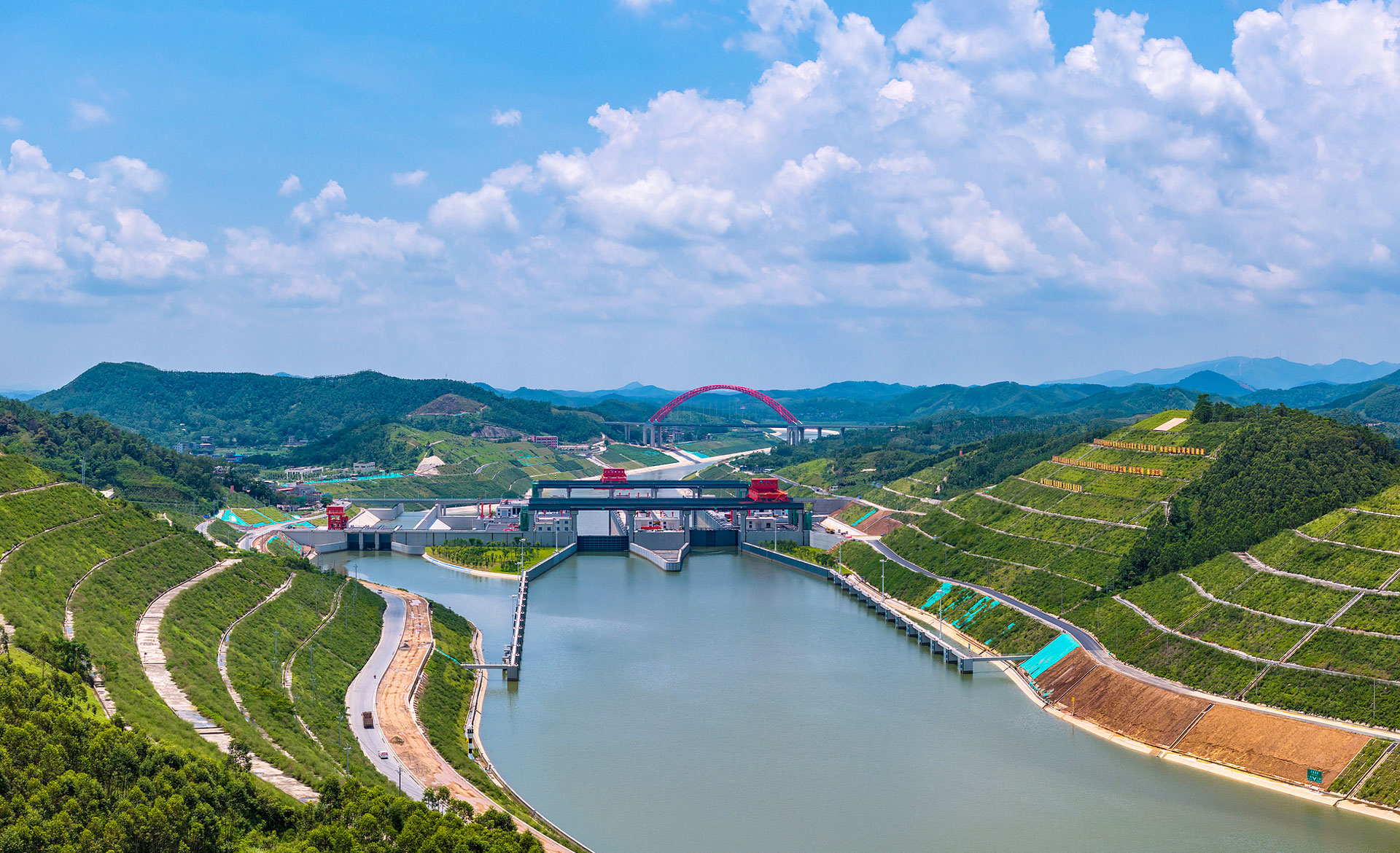
China’s Pinglu Canal in Guangxi officially opened for commercial navigation on Wednesday, creating a direct waterway between the Xijiang River and the Beibu Gulf. The 134.2-kilometer canal avoids the traditional route through Guangdong, cutting shipping distances by more than 560 kilometers and potentially reducing logistics costs by 18%–30%, with estimated annual savings of about 5.2 billion yuan.
The canal is expected to strengthen the New International Land-Sea Trade Corridor by making it easier to export Chinese electric vehicles and industrial goods and import Southeast Asian raw materials. The project also included environmental measures, such as a wildlife-only ecological bridge to reconnect habitats. Engineers reused more than 98% of the 315 million cubic meters of excavated material for construction, land restoration and the creation of about 927 hectares of farmland.

The canal is therefore being presented not only as a major trade route but also as an attempt to balance large-scale infrastructure development with environmental protection.
You can listen to the programs organized by MI Radio on Google Podcast, Apple Podcast and Spotify.




You can download MI Radio application on Google Play Store and Apple App Store.


