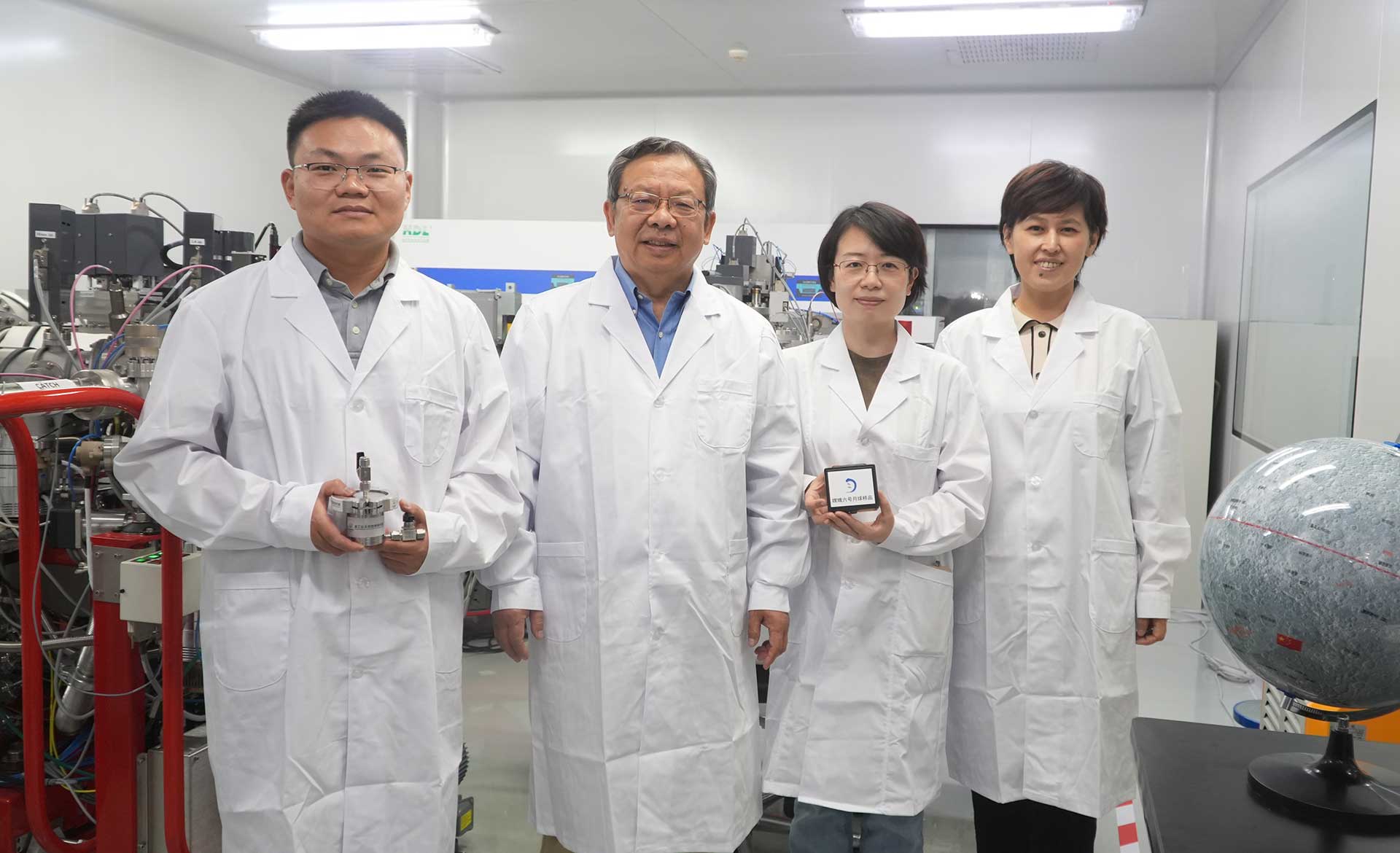
Chinese scientists have revealed that the Moon’s far-side mantle is significantly cooler than its near side, based on new findings from the Chang’e 6 mission. The study, published in Nature Geoscience on September 30, analyzed basalt fragments returned from the far side of the Moon and determined that their mantle potential temperature was about 100°C lower than that of nearside samples previously collected by the Apollo and Chang’e 5 missions. The far-side basalts are around 2.8 billion years old. This research, conducted by experts from the Beijing Research Institute of Uranium Geology, Peking University, and Shandong University, offers the first physical evidence of hemispherical differences in the Moon’s interior, marking a major step forward in lunar science. Researchers emphasize that this breakthrough opens the door to verifying earlier theories and forming new ones about the Moon’s evolution, now that samples from its far side are available for the first time. It follows the 2022 discovery of a new lunar mineral from Chang’e 5’s nearside samples, and reflects China’s growing contributions to space and planetary science.
Credit – CGTN
You can listen to the programs organized by MI Radio on Google Podcast, Apple Podcast and Spotify.




You can download MI Radio application on Google Play Store and Apple App Store.


